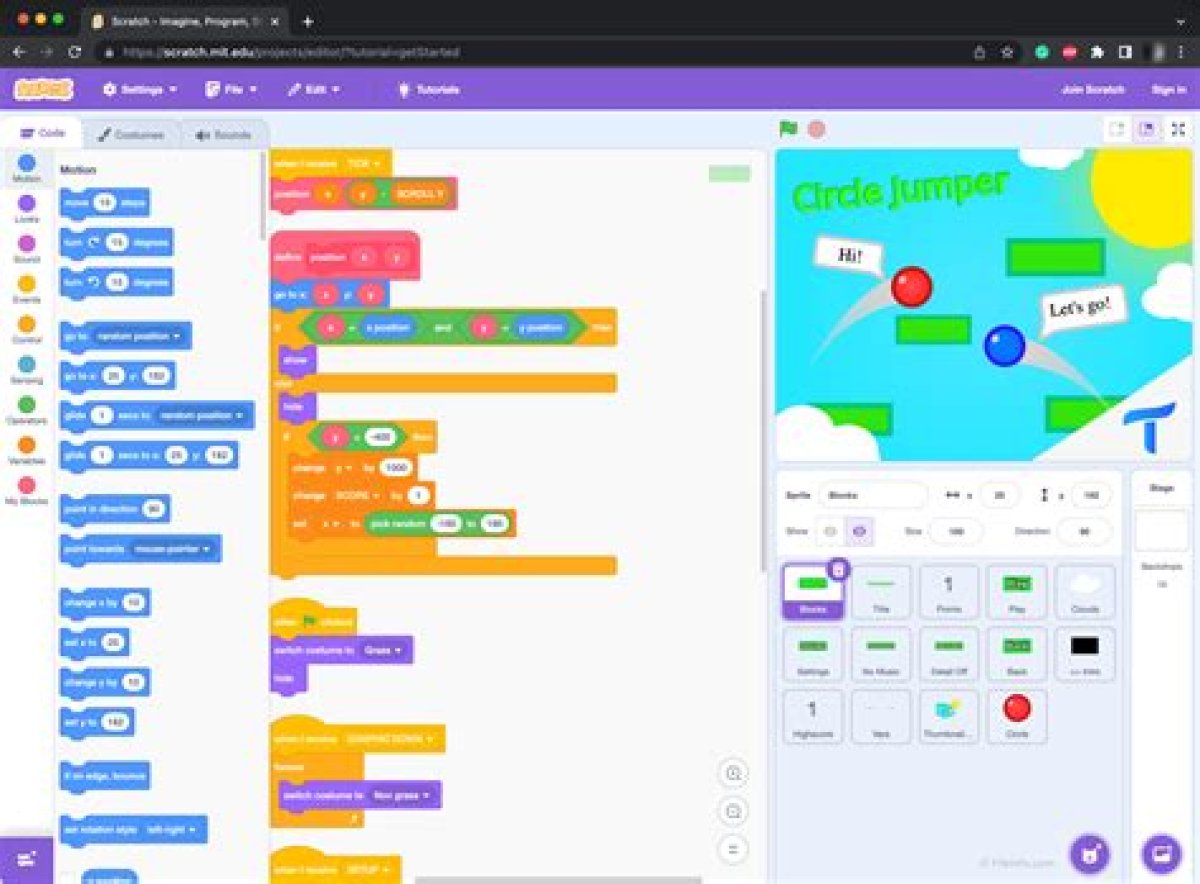
Scratch MIT EDU is an innovative platform designed to teach programming concepts to children and beginners in an engaging and interactive manner. Developed by the Massachusetts Institute of Technology (MIT), Scratch utilizes a visual programming language that allows users to create animations, games, and interactive stories without requiring advanced coding skills. In this article, we will explore the features, benefits, and educational value of Scratch, as well as how it can empower the next generation of programmers.
In today's digital age, understanding programming is not just advantageous; it is essential. Scratch provides a foundation for young learners to develop computational thinking and problem-solving skills that are critical in various fields. This article aims to provide a thorough understanding of Scratch MIT EDU, including its educational philosophy, user interface, and resources available for learners and educators alike.
Whether you are a parent looking for educational tools for your child or an educator seeking effective teaching methods, this guide will equip you with the knowledge necessary to navigate and utilize Scratch effectively. Let's delve into the world of Scratch MIT EDU and discover how it can transform the way we learn programming.
What is Scratch?
Scratch is a free programming language and online community where users can create their own interactive stories, games, and animations. The platform is designed primarily for children aged 8 to 16, but it is also used by people of all ages. Users can drag and drop code blocks to create programs, making it accessible for beginners who may not have any prior coding experience.
Key Features of Scratch
- Visual Programming Interface: Scratch uses a block-based interface that simplifies coding by allowing users to snap together code blocks.
- Interactive Projects: Users can create and share their projects with others in the Scratch community.
- Multimedia Integration: Scratch supports the use of images, sounds, and music, enabling users to create rich and engaging experiences.
History of Scratch
Scratch was developed by the Lifelong Kindergarten Group at MIT Media Lab, led by Mitchel Resnick. The project began in 2003, and Scratch was officially launched in 2007. The aim was to create a programming language that would make it easier for young people to learn coding concepts while fostering creativity and collaboration.
Since its inception, Scratch has evolved significantly, with new features and improvements implemented over the years. Today, Scratch is used in schools, after-school programs, and at home by millions of users around the world.

